
고정 헤더 영역
상세 컨텐츠
본문
728x90
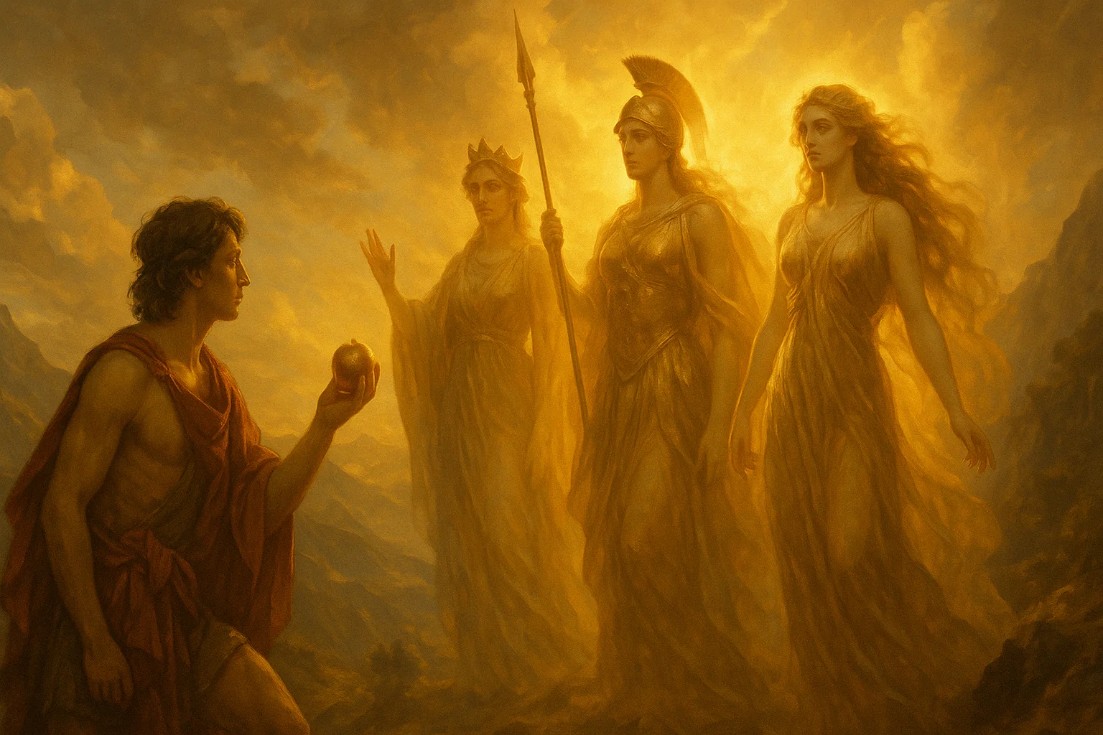
[Greek Mythology] The Judgment of Paris: A Golden Apple and the Spark of War
Have you ever faced a choice where every option promised glory—but carried hidden ruin? In Greek mythology, one such decision sparked a conflict that would echo through history: The Judgment of Paris, a tale of beauty, ego, and the first domino in the fall of Troy.
The Wedding Without Strife
When Peleus and Thetis—a mortal and a sea goddess—were wed, all the gods were invited except one: Eris, goddess of discord. Furious at being snubbed, she crashed the wedding banquet and threw a golden apple onto the table.
On the apple were three words: “To the fairest.”
Instantly, three goddesses claimed it—Hera, queen of the gods; Athena, goddess of wisdom and war; and Aphrodite, goddess of love and beauty.
A Mortal to Decide
To avoid divine infighting, Zeus appointed a mortal to judge the fairest: Paris, prince of Troy.
Each goddess offered a bribe.
- Hera promised power and kingship over all men.
- Athena offered unmatched wisdom and military prowess.
- Aphrodite promised him the most beautiful woman in the world—Helen of Sparta.
Paris chose Aphrodite, and with it, desire over duty.
The Stealing of Helen
Aphrodite kept her word. She enchanted Helen to fall in love with Paris, who then spirited her away to Troy, despite her being already married to King Menelaus of Sparta.
The Greeks launched a thousand ships to bring her back, igniting the Trojan War—a ten-year siege filled with heroes, blood, and gods.
A Choice With Consequence
Paris didn’t intend to start a war. He chose love, or perhaps beauty. But his decision carried weight beyond mortal understanding.
The Judgment of Paris shows how even small, personal choices—when tied to ego, temptation, and power—can shake the foundations of the world.
What This Myth Teaches Us
This story teaches that there’s no such thing as a costless decision. When we choose based on flattery or surface appeal, we may gain what we want—but lose what matters most.
It’s also a tale of manipulation by the powerful, of how mortals are often pawns in games far bigger than themselves.
Final Reflection
Next time you’re offered three tempting paths, remember Paris. The apple may be golden—but what lies behind each promise may weigh heavier than it gleams.
[그리스 신화] 파리스의 심판: 황금 사과와 전쟁의 불씨
모든 선택이 영광을 약속하지만, 그 뒤에 파멸을 감추고 있다면—당신은 무엇을 선택하시겠습니까?
그리스 신화에서 파리스의 심판(The Judgment of Paris)은
아름다움과 자만, 신들의 유혹 속에서 한 인간의 선택이 어떻게 세상을 뒤흔드는 전쟁의 시작이 되었는지를 보여주는 이야기입니다.
불화를 배제한 결혼식
영웅 펠레우스(Peleus)와 바다의 여신 테티스(Thetis)의 결혼식.
모든 신들이 초대되었지만 단 한 명—불화의 여신 에리스(Eris)는 제외되었습니다.
분노에 찬 에리스는 결혼연회에 불청객처럼 등장하여,
황금 사과 하나를 연회장에 던집니다.
그 사과에는 이렇게 쓰여 있었습니다:
“가장 아름다운 이에게(To the fairest)”
그 순간, 세 명의 여신이 사과를 차지하려 합니다:
- 헤라 – 신들의 여왕
- 아테나 – 지혜와 전쟁의 여신
- 아프로디테 – 사랑과 아름다움의 여신
한 인간이 심판하다
신들 사이의 갈등을 막기 위해,
제우스는 이 판결을 인간에게 맡기기로 결정합니다.
그리하여 선택된 이는 트로이의 왕자, 파리스(Paris).
여신들은 각자의 방식으로 그를 유혹합니다:
- 헤라는 세상의 왕권과 권력을,
- 아테나는 지혜와 전쟁의 승리를,
- 아프로디테는 세상에서 가장 아름다운 여인, 헬레네(Helen)를 약속합니다.
파리스는 아프로디테를 선택하며,
욕망을 의무보다 앞세운 선택을 하게 됩니다.
헬레네의 유혹과 납치
아프로디테는 약속을 지킵니다.
그녀는 헬레네가 파리스에게 사랑을 느끼도록 마법을 걸고,
파리스는 그녀를 스파르타에서 트로이로 데려갑니다.
하지만 문제는—헬레네는 이미 스파르타 왕 메넬라오스의 아내였습니다.
결국 그리스는 헬레네를 되찾기 위해 천 척의 함대를 출항시키고,
트로이 전쟁이 발발합니다.
이는 10년에 걸친 피의 전쟁이자,
신들과 영웅들이 얽힌 대서사시의 시작이었습니다.
하나의 선택, 거대한 결과
파리스는 전쟁을 의도하지 않았습니다.
그는 사랑을, 혹은 아름다움을 선택했을 뿐입니다.
그러나 그 결정은 신들의 세계를 흔들었고,
인류의 운명을 바꾸었습니다.
파리스의 심판은 작은 선택조차,
욕망과 자만, 권력의 그림자가 더해질 때
얼마나 거대한 파장을 낳을 수 있는지를 보여줍니다.
이 신화가 전하는 교훈
이 이야기는 말합니다:
- “대가 없는 선택은 없다.”
- “겉모습이나 아첨에 이끌린 결정은,
결국 진짜 중요한 것을 잃게 만든다.”
또한 이 신화는 힘 있는 자의 유혹과 조종,
그리고 보통 사람들이 얼마나 거대한 판의 말이 될 수 있는지를 보여줍니다.
마지막 성찰
당신 앞에 세 개의 유혹적인 길이 놓였을 때,
파리스를 떠올려 보세요.
황금빛 사과는 눈부시게 빛나지만,
그 이면에 무엇이 숨어 있을지는
그 누구도 확신할 수 없습니다.
그러므로 선택의 순간에는,
단순한 욕망이 아닌 깊은 통찰과 책임감으로 바라보아야 합니다.

728x90
'이야기를 담다 > 신화와 설화' 카테고리의 다른 글
| [슬라브 신화] 모로즈코: 차가운 정의와 은빛 자비의 겨울 정령 (1) | 2025.04.21 |
|---|---|
| [중국 고전 설화] 나타의 전설: 하늘에 맞선 소년 영웅 (2) | 2025.04.21 |
| [북미 원주민 전설] 쌍둥이의 신화: 플린트와 스카이 홀더, 창조의 균형 (1) | 2025.04.21 |
| [일본 전설] 벤케이와 천 번의 결투: 충성이 깃든 칼끝의 이야기 (1) | 2025.04.21 |
| [그리스 신화] 계절의 탄생: 데메테르, 페르세포네, 그리고 슬픔의 순환 (1) | 2025.04.21 |
"지식의 씨앗을 심고, 지혜의 열매를 맺다. 다담출판은 깊이 있는 콘텐츠로 세상을 풍요롭게 만듭니다."
일부 글은 인공지능에 의해 작성되었으며, 일부 내용에 오류가 있을 수 있음을 알려드립니다.
 "생각을 담다, 가치를 담다, 다담." © DADAM cop. with Magazine Lab


