
고정 헤더 영역
상세 컨텐츠
본문
728x90
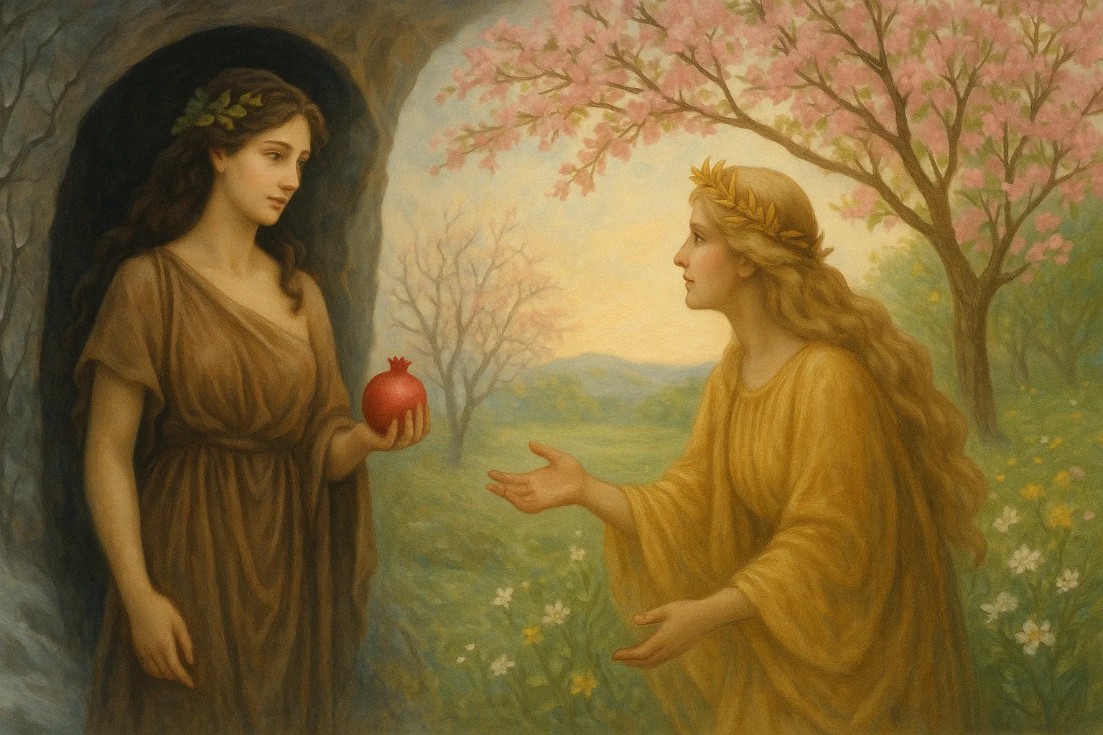
[Greek Mythology] The Birth of the Seasons: Demeter, Persephone, and the Cycle of Grief
Have you ever felt that time itself moves with your emotions—that joy makes days longer, and sorrow shortens the light? In Greek mythology, the changing seasons are not just weather—they are the emotional heartbeat of a mother’s love and loss. This is the story of Demeter and Persephone, a myth of descent, return, and the power of presence.
A Daughter of Spring
Persephone was the daughter of Demeter, the goddess of agriculture, grain, and the fertile earth. She was light-footed, gentle, and blooming—just like the flowers she tended.
But the earth beneath her feet held a secret.
The Abduction by Hades
One day, as Persephone wandered through a meadow, the earth cracked open and Hades, lord of the underworld, surged forth in his chariot. He seized Persephone and vanished below, taking her to be his queen.
Demeter searched the world in grief. As she wept, crops withered, animals weakened, and the world fell into famine.
The Deal of Pomegranates
Eventually, Zeus intervened. He ordered Hades to return Persephone—but Hades had a trick. Before letting her go, he gave her a few seeds of a pomegranate, a food of the underworld.
By eating them, Persephone was bound to return for part of each year.
Thus, a compromise was made: Persephone would spend half the year with Hades and half with Demeter.
The Origin of the Seasons
When Persephone is with Demeter, the earth rejoices—spring and summer bloom. But when she returns to the underworld, Demeter mourns—autumn and winter descend.
Their story is a mythic explanation for the rhythm of life, where growth and stillness, presence and absence, shape the human world.
What This Myth Teaches Us
The tale of Demeter and Persephone is more than an origin story—it’s about grief and growth, control and letting go, and the eternal return of life after darkness.
It reminds us that absence does not mean abandonment, and that even sorrow can give rise to beauty—just as winter makes spring sweeter.
Final Reflection
Next time you see a flower push through frozen ground or feel warmth return to cold air, think of Demeter’s joy—and Persephone’s return. Some losses never vanish, but they bloom again, in their own time.
[그리스 신화] 계절의 탄생: 데메테르, 페르세포네, 그리고 슬픔의 순환
기쁨이 날을 길게 만들고, 슬픔이 빛을 짧게 만드는 것처럼
시간이 감정과 함께 흐른다고 느낀 적 있으신가요?
그리스 신화에서 계절은 단순한 기후 변화가 아니라,
한 어머니의 사랑과 상실이 빚어낸 감정의 리듬입니다.
이것은 데메테르(Demeter)와 페르세포네(Persephone)의 이야기—
하강과 귀환, 존재와 부재의 순환을 통해
삶의 시간을 새기는 신화입니다.
봄의 딸
페르세포네는 농업과 곡식, 풍요로운 대지의 여신 데메테르의 딸입니다.
그녀는 가볍고 온화하며 꽃과 같은 존재로,
대지를 돌보며 봄의 기운을 닮은 삶을 살고 있었습니다.
그러나 그녀가 딛고 선 땅 아래에는
세상이 알지 못한 비밀이 숨어 있었습니다.
하데스의 납치
어느 날, 페르세포네가 들판을 거닐고 있을 때,
대지가 갈라지며 저승의 신 하데스(Hades)가
검은 마차를 타고 튀어나옵니다.
그는 그녀를 낚아채듯 붙잡아
지하 세계로 사라지고,
그녀를 저승의 여왕으로 삼습니다.
데메테르는 절망 속에서 딸을 찾아 세상을 헤맵니다.
그녀가 흐느낄 때, 작물은 시들고,
동물들은 기운을 잃고,
세상은 기아와 황폐 속으로 빠져들었습니다.
석류로 맺어진 계약
마침내, 신들의 왕 제우스(Zeus)가 중재에 나서
하데스에게 페르세포네를 돌려보내라 명령합니다.
하지만 하데스는 마지막 순간,
페르세포네에게 석류 씨 몇 알을 먹입니다.
저승의 음식을 먹은 자는 그 세계에 묶인다는
고대의 법칙에 따라,
페르세포네는 완전히 자유로울 수 없게 됩니다.
결국 타협이 이루어집니다:
“그녀는 해마다 일정한 기간을 하데스와 함께 보내고,
나머지 시간은 어머니와 함께 지상에 머문다.”
계절의 시작
페르세포네가 지상에 돌아오면,
데메테르는 기쁨에 넘쳐
봄과 여름이 피어납니다.
그러나 그녀가 다시 저승으로 향하면,
데메테르는 침묵과 슬픔에 잠기고,
가을과 겨울이 찾아옵니다.
이 이야기는 단순한 기원 신화가 아닌—
성장과 정지, 존재와 부재가 인간 세상을 어떻게 형성하는지를
신화적 언어로 풀어낸 서사입니다.
이 신화가 전하는 것
데메테르와 페르세포네의 이야기는
상실 속에서 피어나는 성장,
통제와 내려놓음,
어둠 이후의 귀환에 관한 이야기입니다.
이 신화는 말합니다:
“부재는 곧 버림이 아니며,
슬픔은 새로운 생명을 잉태한다.”
겨울이 있기에
봄은 더욱 눈부시게 돌아옵니다.
마지막 성찰
다음에 얼어붙은 땅 위로 꽃 한 송이가 뚫고 올라올 때,
혹은 차가운 공기 속에서 따뜻한 햇살이 스며올 때,
데메테르의 기쁨과 페르세포네의 귀환을 떠올려 보세요.
어떤 상실은 영원히 사라지지 않지만,
자신만의 시간 속에서 다시 피어납니다.

728x90
'이야기를 담다 > 신화와 설화' 카테고리의 다른 글
| [북미 원주민 전설] 쌍둥이의 신화: 플린트와 스카이 홀더, 창조의 균형 (1) | 2025.04.21 |
|---|---|
| [일본 전설] 벤케이와 천 번의 결투: 충성이 깃든 칼끝의 이야기 (1) | 2025.04.21 |
| [노르드 신화] 아름다운 발드르: 잃어버린 빛의 이야기 (1) | 2025.04.21 |
| [이집트 신화] 세크메트: 분노와 치유를 동시에 품은 사자의 여신 (0) | 2025.04.21 |
| [켈트 신화] 브리짓: 불꽃과 봄, 치유의 말을 품은 여신 (1) | 2025.04.21 |
"지식의 씨앗을 심고, 지혜의 열매를 맺다. 다담출판은 깊이 있는 콘텐츠로 세상을 풍요롭게 만듭니다."
일부 글은 인공지능에 의해 작성되었으며, 일부 내용에 오류가 있을 수 있음을 알려드립니다.
 "생각을 담다, 가치를 담다, 다담." © DADAM cop. with Magazine Lab


