
고정 헤더 영역
상세 컨텐츠
본문
728x90
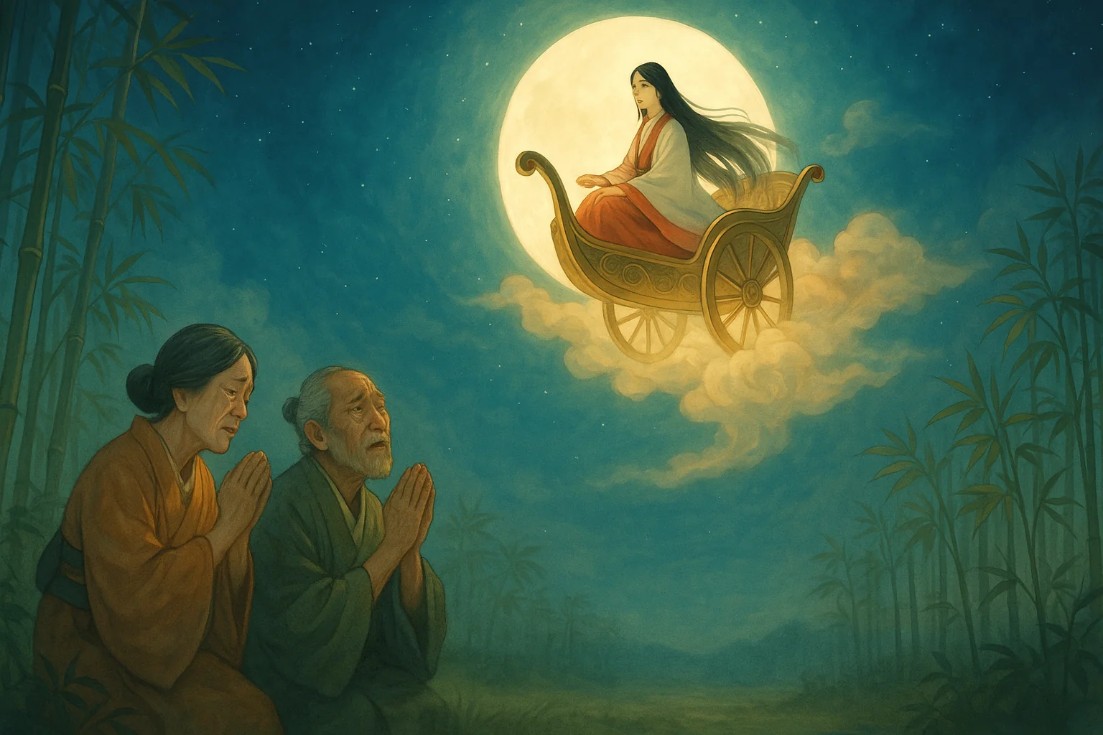
[Japanese Legends] The Bamboo Cutter and the Moon Princess: Kaguya’s Celestial Secret
Have you ever loved someone you knew you couldn’t keep? The Japanese folktale of Kaguya-hime, the mysterious moon princess, begins like a dream and ends like a quiet heartbreak beneath a full moon.
A Glimmer in the Bamboo
One day, an old bamboo cutter named Taketori no Okina discovered a glowing stalk of bamboo deep in the forest. Inside was a tiny girl, radiant and delicate.
He and his wife raised her as their own. She grew into a stunning woman, named Kaguya-hime, whose beauty captivated all who saw her.
Love, Suitors, and Impossible Tasks
As word of her beauty spread, many noble suitors came to win her hand. But Kaguya-hime refused each one—setting them impossible tasks, like retrieving the Buddha’s stone begging bowl or a jeweled branch from a mythical island.
All failed, some through deceit, some through misfortune. Even the Emperor of Japan fell for her, but she declined his affection with deep sadness in her eyes.
A Secret Longing for the Sky
As the seasons passed, Kaguya-hime became increasingly sorrowful. On moonlit nights, she would gaze skyward, lost in thought. Her foster parents begged her to share her pain.
At last, she revealed the truth: she was not of Earth. She came from the Moon Kingdom, and the time had come for her return.
Despite guards and the Emperor himself trying to prevent it, a celestial procession descended to take her back. She left behind a letter and an elixir of immortality for the Emperor—who, heartbroken, ordered both to be burned on the highest mountain.
The Mountaintop of Memory
That mountain became Mt. Fuji. It’s said that “fuji” sounds like “immortality” in Japanese, and the smoke from the burned elixir is the volcano’s eternal plume—a sign of love that reaches toward the sky but never returns.
What This Myth Teaches Us
Kaguya’s story is one of impermanence, longing, and self-truth. She teaches us that not all things beautiful are meant to stay, and that love must sometimes let go.
The tale reflects the Japanese aesthetic of mono no aware—the awareness of life’s fleeting beauty.
Final Reflection
Next time you look at a full moon, think of Kaguya-hime—watching from afar. Some stories are written in stardust and silence, teaching us that even sorrow can be beautiful when it’s born of love.
[일본 전설] 대나무 베는 노인과 달의 공주: 카구야 공주의 하늘의 비밀
잡을 수 없다는 걸 알면서도, 누군가를 사랑해본 적 있으신가요?
일본 전래동화인 ‘카구야 공주 이야기(かぐや姫の物語)’는
꿈처럼 시작되지만, 보름달 아래 조용한 이별로 끝나는 이야기입니다.
대나무 속의 빛
어느 날, 노인 다케토리노 오키나(竹取の翁)는
숲속 깊은 곳에서 빛나는 대나무를 발견합니다.
그 속에는 손바닥만 한, 눈부시게 아름다운 작은 소녀가 들어 있었습니다.
노인은 아내와 함께 그녀를 자신들의 자식처럼 키우며,
그녀에게 ‘카구야히메(輝夜姫)’,
즉 ‘빛나는 밤의 공주’라는 이름을 지어줍니다.
그녀는 자라며 세상에서 보기 드문 절세미인이 되었고,
그 소문은 널리 퍼지기 시작합니다.
구혼자들과 불가능한 과제
카구야히메의 아름다움에 매혹된 수많은 귀족들이
그녀의 손을 얻기 위해 찾아옵니다.
그러나 그녀는 모두에게 불가능한 과제를 내어 거절합니다.
예를 들어:
- 부처의 돌 바리때를 구해오라,
- 신화 속 섬에서 보석이 달린 가지를 꺾어오라, 등.
어떤 이들은 속임수로 시도하다 실패하고,
어떤 이들은 재앙을 맞이합니다.
심지어 일본의 천황까지도 그녀를 사랑하게 되지만,
카구야히메는 깊은 슬픔이 담긴 눈빛으로 그의 고백을 거절합니다.
하늘을 향한 비밀한 그리움
계절이 바뀌면서,
카구야히메는 점점 더 슬픔에 잠기고,
달빛이 가득한 밤이면 하늘을 바라보며 깊은 사색에 잠깁니다.
양부모는 딸의 고통을 알아채고
무슨 일이냐고 묻습니다.
마침내 그녀는 진실을 밝힙니다:
“저는 이 세상의 사람이 아니에요.
달나라에서 온 존재이며,
이제 다시 돌아가야 할 시간이 왔어요.”
이별과 불사의 산
카구야히메가 떠나는 날,
하늘에서 천상의 사자들이 행렬을 이루며 지상으로 내려옵니다.
천황과 군사들조차 그녀를 막으려 하지만,
그녀는 달의 고요한 사명에 따라,
편지와 불로장생의 약(불사의 영약)을 남기고 떠납니다.
천황은 그녀의 이별에 가슴 아파하며
그녀가 남긴 편지와 영약을 일본에서 가장 높은 산에서 태워버리라 명합니다.
그 산이 바로 후지산(富士山)입니다.
일본어에서 ‘후지(ふじ)’는 불사(不死, 불멸)와 발음이 유사하며,
산 정상에서 지금도 피어오르는 연기는
다다를 수 없는 사랑이 하늘로 향하는 영원한 그리움의 표식이라 전해집니다.
카구야 공주가 전하는 이야기
이 이야기는 단순한 로맨스가 아닙니다.
그것은 무상함, 자기 정체성, 그리고 이별 속의 아름다움에 대한 이야기입니다.
카구야히메는 머무르지 않음으로써 더욱 깊이 사랑받고,
우리에게 알려줍니다:
“아름다운 것들이 반드시 영원히 곁에 머무는 것은 아니다.
진정한 사랑은 때때로 놓아주는 선택 안에 있다.”
그녀의 이야기는 일본 미학 중 하나인
‘모노노 아와레(物の哀れ)’—덧없음 속의 감동과 아름다움—을 상징합니다.
마지막 성찰
다음 보름달 밤,
하늘을 올려다볼 때
멀리서 지켜보는 카구야 공주를 떠올려 보세요.
그녀는 외롭지도, 슬프지도 않지만,
사랑을 안고 조용히 빛나고 있는 존재입니다.
어떤 이야기는 말이 아닌 별빛과 침묵으로 쓰입니다.
그리고 그런 슬픔은, 사랑에서 태어났기에 더욱 아름답습니다.

728x90
'이야기를 담다 > 신화와 설화' 카테고리의 다른 글
| [아프리카 민담] 아난시와 지혜의 항아리: 장난꾸러기가 배운 교훈 (2) | 2025.04.18 |
|---|---|
| [슬라브 신화] 불새 이야기: 아름다움의 불꽃, 욕망의 시험 (1) | 2025.04.17 |
| [한국 전래동화] 심청전: 효심과 희생이 맺은 기적의 이야기 (1) | 2025.04.17 |
| [마야 신화] 포폴 부의 창조 이야기: 세 번의 실패와 인류의 탄생 (0) | 2025.04.17 |
| [그리스 신화] 다이달로스와 이카로스: 야망의 날개, 대가를 치른 비행 (0) | 2025.04.17 |
"지식의 씨앗을 심고, 지혜의 열매를 맺다. 다담출판은 깊이 있는 콘텐츠로 세상을 풍요롭게 만듭니다."
일부 글은 인공지능에 의해 작성되었으며, 일부 내용에 오류가 있을 수 있음을 알려드립니다.
 "생각을 담다, 가치를 담다, 다담." © DADAM cop. with Magazine Lab


