
고정 헤더 영역
상세 컨텐츠
본문
728x90
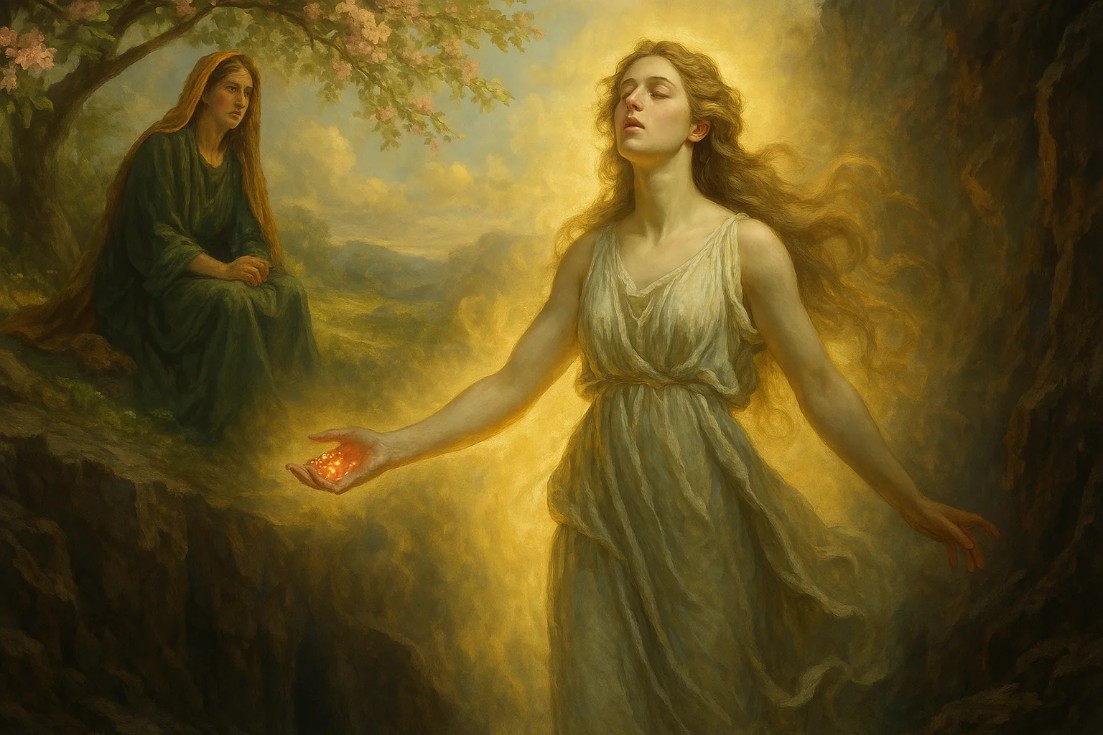
[Greek Mythology] Persephone and the Pomegranate: Seasons of Loss and Return
Have you ever felt like your life moves in cycles—of growth, withdrawal, and return? The ancient Greeks saw that too, and they told a story that made sense of it all: the myth of Persephone, the goddess of spring, and her time spent in the underworld.
The Abduction
Persephone, daughter of Demeter, the earth goddess, was picking flowers in a meadow when the earth split open and Hades, god of the underworld, emerged in his chariot and abducted her.
Demeter, heartbroken, searched the world for her daughter. As she mourned, crops withered, animals grew thin, and famine spread across the Earth.
Bargaining with the Underworld
Zeus, the king of the gods, could not ignore the suffering. He ordered Hades to return Persephone.
Hades agreed—but offered Persephone a few pomegranate seeds before she left. The moment she ate them, she became bound to the underworld, as eating food from that realm tied a soul to it.
A compromise was reached: Persephone would spend part of the year with Hades in the underworld, and the rest with her mother on Earth.
The Birth of the Seasons
When Persephone is with Demeter, spring and summer bloom—the earth is warm, fruitful, and alive. When she returns to Hades, autumn and winter take hold—Demeter grieves, and the world quiets in her sorrow.
Thus, the cycle of the seasons was born—not from science, but from story.
A Story of Cycles and Change
This myth is about more than agriculture. It’s about growing up, about losing and finding oneself, and about how even loss can be part of a greater rhythm.
Persephone begins as a passive daughter, but becomes a queen who walks between two worlds. Her journey is every human’s journey—through light and darkness, comfort and challenge.
Final Reflection
Next time the leaves fall or flowers bloom, remember Persephone. She is not just a goddess of spring, but a symbol of resilience and return—reminding us that even after descent into darkness, life always finds its way back to light.
[그리스 신화] 페르세포네와 석류: 상실과 귀환의 계절 이야기
삶이 성장과 침잠, 그리고 귀환의 순환처럼 느껴질 때가 있지 않으신가요?
고대 그리스인들 또한 그렇게 느꼈고, 그들은 이 모든 순환에 의미를 부여하기 위해 한 가지 이야기를 만들어냈습니다.
봄의 여신 페르세포네(Persephone)와 그녀가 저승에서 보낸 시간에 관한 신화입니다.
납치
페르세포네는 대지의 여신 데메테르(Demeter)의 딸로,
들판에서 꽃을 따고 있던 어느 날, 땅이 갈라지며 저승의 신 하데스(Hades)가 마차를 타고 나타나
그녀를 납치해 저승으로 데려갑니다.
사랑하는 딸이 사라지자, 데메테르는 절망에 빠져
온 세상을 뒤지며 그녀를 찾아 나섰습니다.
그녀의 슬픔은 땅에 그대로 반영되어
곡식은 마르고, 가축은 야위며, 기근이 온 세상에 퍼지게 됩니다.
저승과의 협상
신들의 왕 제우스(Zeus)는 결국 지상의 고통을 외면할 수 없게 되었고,
하데스에게 페르세포네를 돌려보내라 명령합니다.
하데스는 이를 받아들이지만, 떠나기 직전 페르세포네에게 석류 씨 몇 알을 건넵니다.
그녀가 그 씨앗을 먹는 순간,
저승의 음식을 먹은 자는 그곳에 묶인다는 법칙에 따라
그녀는 저승과 연결된 존재가 되고 맙니다.
결국 타협안이 도출됩니다:
“페르세포네는 해마다 일정 기간은 하데스와 함께 저승에 머물고,
나머지 기간은 어머니 데메테르와 지상에서 보낸다.”
계절의 탄생
페르세포네가 어머니와 함께할 때,
봄과 여름이 찾아오고,
땅은 다시 풍요로워지고 생명으로 가득 찹니다.
그러나 그녀가 하데스 곁으로 돌아가면,
가을과 겨울이 시작되며,
데메테르는 슬픔에 잠기고 세상은 조용히 멈추게 됩니다.
이렇게 하여 과학이 아닌 이야기에서 탄생한 사계절의 순환이 만들어졌습니다.
순환과 변화에 대한 이야기
이 신화는 단순히 농경 사회의 자연 주기를 설명하는 데 그치지 않습니다.
그것은 성장, 상실, 자아의 재발견,
그리고 어둠조차도 더 큰 리듬의 일부일 수 있다는 깨달음에 관한 이야기입니다.
페르세포네는 처음엔 수동적인 소녀였지만,
이후에는 두 세계를 넘나드는 여왕이 됩니다.
그녀의 여정은 곧 우리 인간 모두의 여정이기도 합니다—
빛과 어둠, 안락함과 도전 사이를 오가는 삶의 길.
마지막 성찰
다음에 낙엽이 떨어지거나 꽃이 피는 모습을 보게 된다면,
페르세포네를 떠올려 보세요.
그녀는 단순한 봄의 여신이 아니라,
귀환과 회복의 상징,
그리고 어둠 속에서도 결국 빛으로 나아가는 삶의 순환을 말해주는 존재입니다.

728x90
'이야기를 담다 > 신화와 설화' 카테고리의 다른 글
| [인도 서사시] 하누만의 탄생: 원숭이의 형상을 한 헌신의 화신 (0) | 2025.04.13 |
|---|---|
| [일본 전설] 우라시마 타로 이야기: 시간, 바다, 그리고 우리가 남겨두고 오는 것들 (0) | 2025.04.13 |
| [북아메리카 원주민 신화] 코요테와 별들: 장난꾸러기가 하늘을 그린 이야기 (1) | 2025.04.10 |
| [노르드 신화] 슬레이프니르의 탄생: 변신의 신 로키와 오딘의 여덟 다리 군마 (1) | 2025.04.10 |
| [아프리카 민담] 사자의 수염: 인내, 사랑, 그리고 신뢰를 얻는 이야기 (0) | 2025.04.10 |
"지식의 씨앗을 심고, 지혜의 열매를 맺다. 다담출판은 깊이 있는 콘텐츠로 세상을 풍요롭게 만듭니다."
일부 글은 인공지능에 의해 작성되었으며, 일부 내용에 오류가 있을 수 있음을 알려드립니다.
 "생각을 담다, 가치를 담다, 다담." © DADAM cop. with Magazine Lab


